Calculated Choas
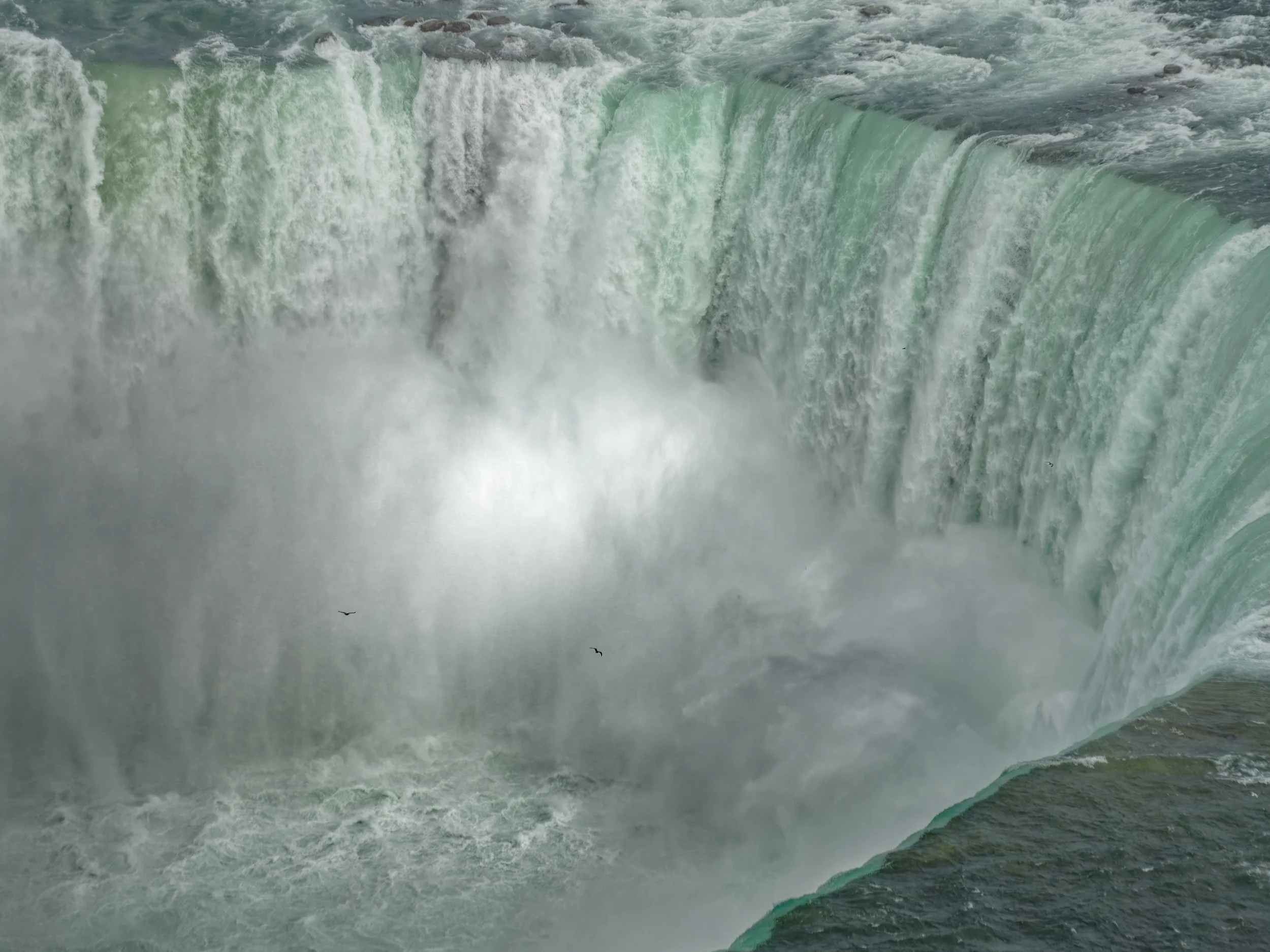
Plunging over a 170 foot drop at speeds exceeding thirty miles per hour, thousands of tons of water violently compress air into the river basin below. This massive kinetic transfer creates a dense air water emulsion and drives explosive micro updrafts near the base of the falls. Waterfowl exploit these invisible, thermal-like columns of rising air to hover effortlessly alongside the sheer face of the cascade.
The plunge pool itself acts as a high energy hydraulic trap. As water hurtles over the brink, it generates a brutal shear zone that disorients and incapacitates fish tumbling through the collapse. What appears to be an impenetrable zone of extreme turbulence is actually an efficient foraging haven. Aerial scavengers collect stunned prey from the churning surface with nearly no energetic cost.
This unique hydrodynamic engine makes Niagara Falls the premier gull capital of North America. Up to nineteen distinct species of gulls converge on this single localized hotspot annually, tracking the continuous supply of churned-up biomass. The intersection of extreme fluid dynamics and avian behavior transforms a violent mechanical barrier into one of the continent's most productive seasonal feeding zones.
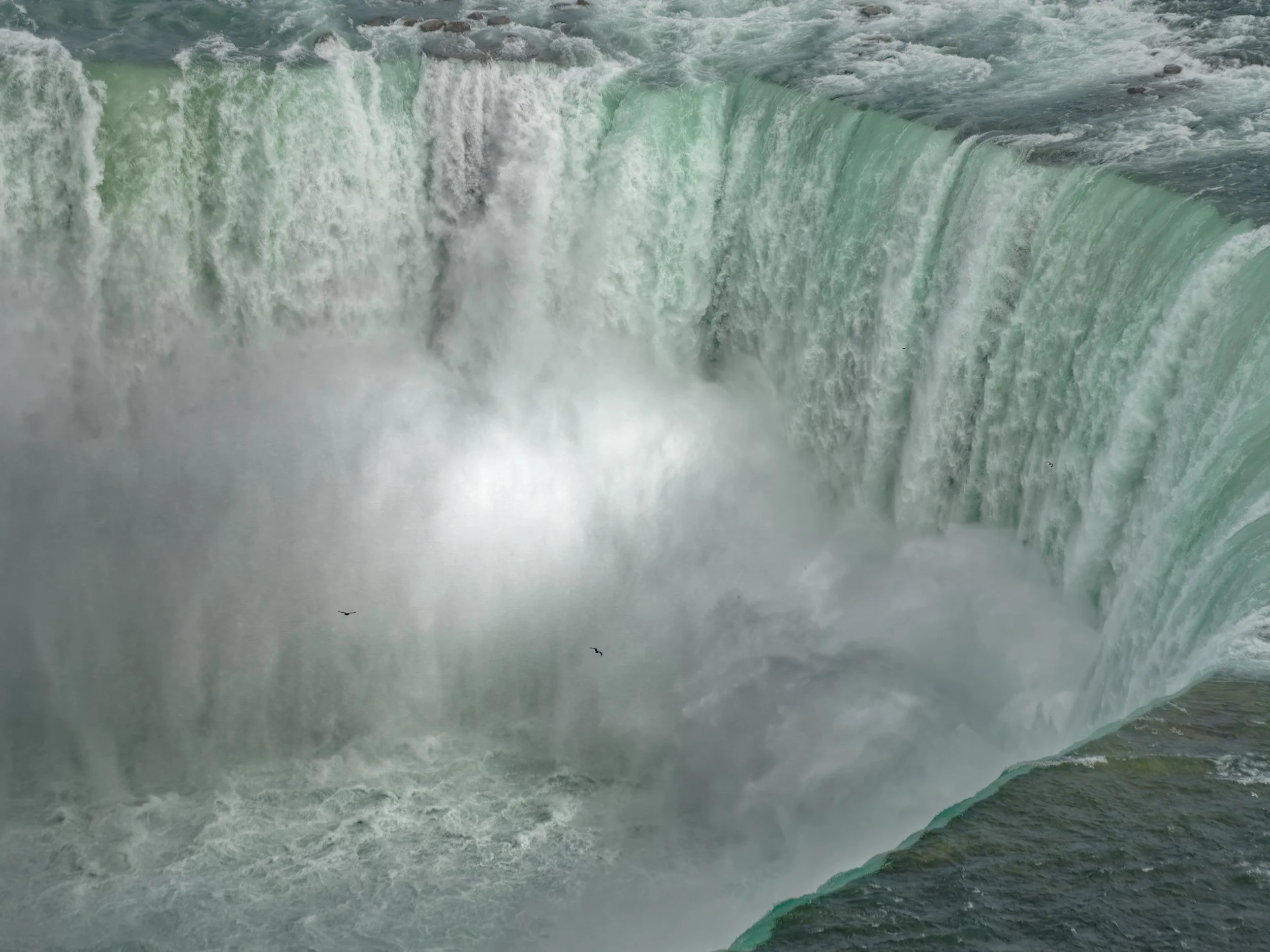
Horseshoe Falls on the Niagara River from Ontario, Canada.
NYS Department of Environmental Conservation, "Niagara River Important Bird Area Designation & Avian Surveys", New York State DEC Report (2018).
Hydraulic Institute & US Geological Survey, "Air Entrainment and Kinetic Energy Dissipation in High-Head Spillways and Waterfalls", USGS Water-Supply Paper Series (2012).
Ewing, K. E. & Weseloh, D. V., "Avian Foraging Efficiency and Species Richness along the Niagara River Corridor", Journal of Great Lakes Research (2009).