Frozen Facing East
Contrary to popular belief, fully bloomed sunflowers abandon their famous dance. While young buds track the sun daily, mature flowers permanently lock toward the east. This fixed orientation maximizes morning solar heating, raising bloom temperatures by several degrees. The added warmth acts as an ecological beacon, attracting pollinators up to five times faster than westward-facing competitors.
Beneath the golden canopy, deep root systems actively restructure local soil physics. By drawing up minerals from deep strata and shading topsoil to minimize evaporative water loss, sunflowers stabilize moisture dynamics across the field. To prevent nutrient depletion and break fungal disease cycles, farmers continuously rotate crops, replacing sunflowers with corn, soybeans, or nitrogen-fixing clover in subsequent seasons.
The weathered timber barn framing the background shares this identical material lineage. Built directly from the native hardwood forest cleared a century ago to expose rich agricultural ground, the standing shelter and the living field remain physical extensions of the exact same local ecosystem.
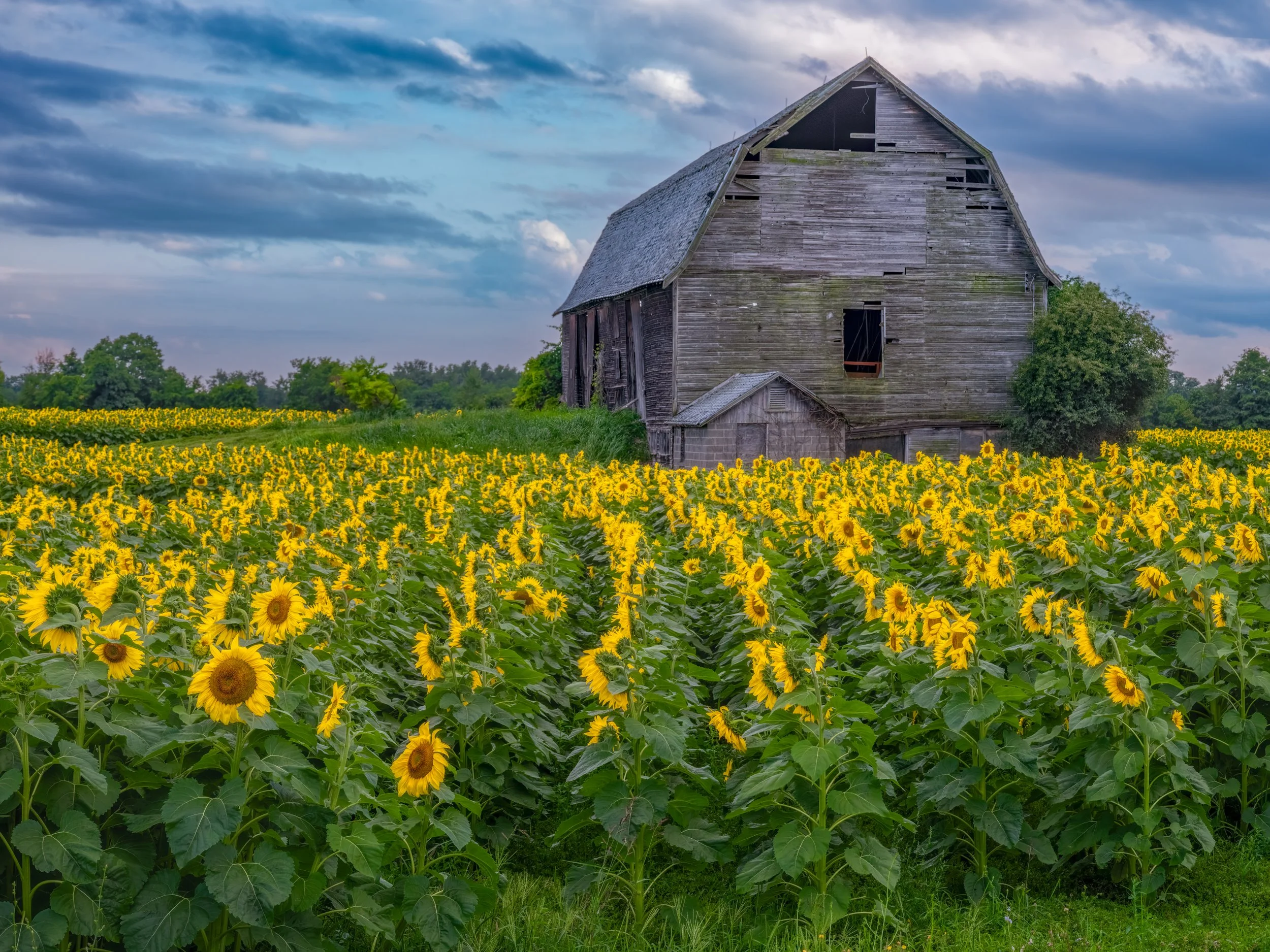
Young sunflowers in King Ferry, NY
Atamian, H. S., Creux, N. M., Brown, E. A., Garner, A. G., Blackman, B. K., & Harmer, S. L., "Circadian regulation of heliotropism, floral orientation, and pollinator visits in sunflower", Science (2016).
Creux, N. M., Brown, E. A., Garner, A. G., Harmer, S. L., & Blackman, B. K., "Flower orientation influences floral temperature, pollinator visits and male fitness in sunflower", New Phytologist (2021).
Karlen, D. L., Varvel, G. E., Bullock, D. G., & Cruse, R. M., "Crop Rotations for Managing Soil Quality and Plant Nutrition", Agronomy Journal (1994).